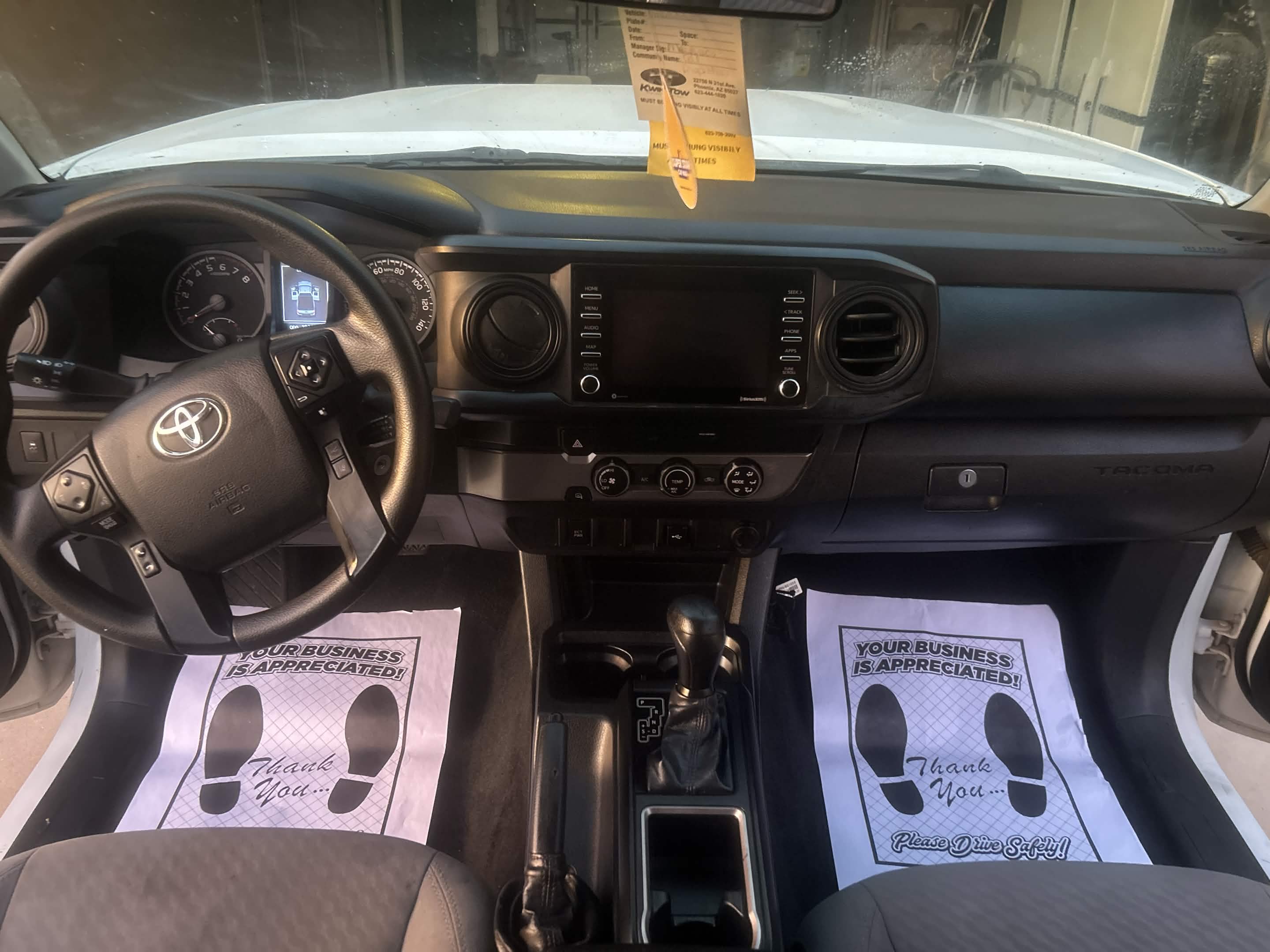
If you run a pest control operation, you already know the cab of a service truck becomes a chemical environment within a few weeks. Technicians climb in with product on their gloves, set sprayers on the passenger floor, and touch the steering wheel, shifter, and door handle a hundred times a day. The residue doesn't look like much — until you notice the film on the dash and the smell that never fully leaves.
Why a normal detail doesn't fix it
A standard interior detail is designed for dirt and dust: vacuum, wipe, dress. Pesticide and fertilizer residues are oily or waxy and bond to plastic and fabric. Wiping with an all-purpose cleaner tends to spread the residue into a thinner, more even layer that looks cleaner but is still there — and still transfers to hands.
What actually removes it
- Degreasing touch points first — wheel, shifter, handles, switches, seat-belt buckles — with a cleaner formulated to break down oily residue, not just lift dust.
- Steam on hard surfaces. Heat loosens bonded residue in textured plastic and vents that wiping can't reach.
- Hot-water extraction on carpet and cloth seats. This is the step most people skip, and it's where most of the odor lives. Extraction pulls residue out rather than sealing it in.
- Headliner and pillar treatment if the odor persists — vapors settle on the headliner over time.
- A protectant on hard surfaces afterward makes the next cleanup easier and slows re-bonding.
How often should pest control cabs be decontaminated?
For a truck running daily routes, a full decontamination two to four times a year with lighter maintenance cleanings every few weeks keeps the cab in a safe, presentable state. Waiting a year between deep cleans means residue has had time to bond into seat foam and headliner fabric, which takes significantly more work to reverse.
A note on technician health
Cab decontamination isn't just about appearance. Technicians spend as much time in the truck as they do at the job, and low-level chronic exposure through contaminated touch points is avoidable. A documented, recurring cleaning program is a straightforward way to show your crew — and your insurer — that you take it seriously.